Sports intelligence · UFC · Chronological modelling
A UFC model that can’t see the future
Historical sports data is full of facts that are harmless today but impossible at the moment a past decision was made. The core product decision was to reconstruct that moment—and reject any feature path that crossed it.
Public model-governance edition.
Decision
Turn knowability into a testable contract.
The public problem sounds straightforward: use a competitor’s prior history to model a future bout. The hard part is not fitting a classifier. It is ensuring that every rating, aggregate and historical feature was rebuilt using only information available before that bout.
Cut on event time
Training windows end before evaluation windows begin. Later outcomes cannot influence earlier ratings, aggregates or feature selection.
Keep pairs together
Reversing the two competitors creates a useful symmetry test, but both orientations must stay in the same evaluation group.
Separate questions
Winner and duration models use their own chronological windows so evidence for one target cannot be casually borrowed to justify the other.
Research surface
Coverage makes honest backtesting possible.
The public research surface runs from 2010 through June 2026. It contains 747 events, 7,987 fights and 2,611 fighters. Those counts show the breadth of the historical reconstruction; they do not by themselves establish quality or future performance.
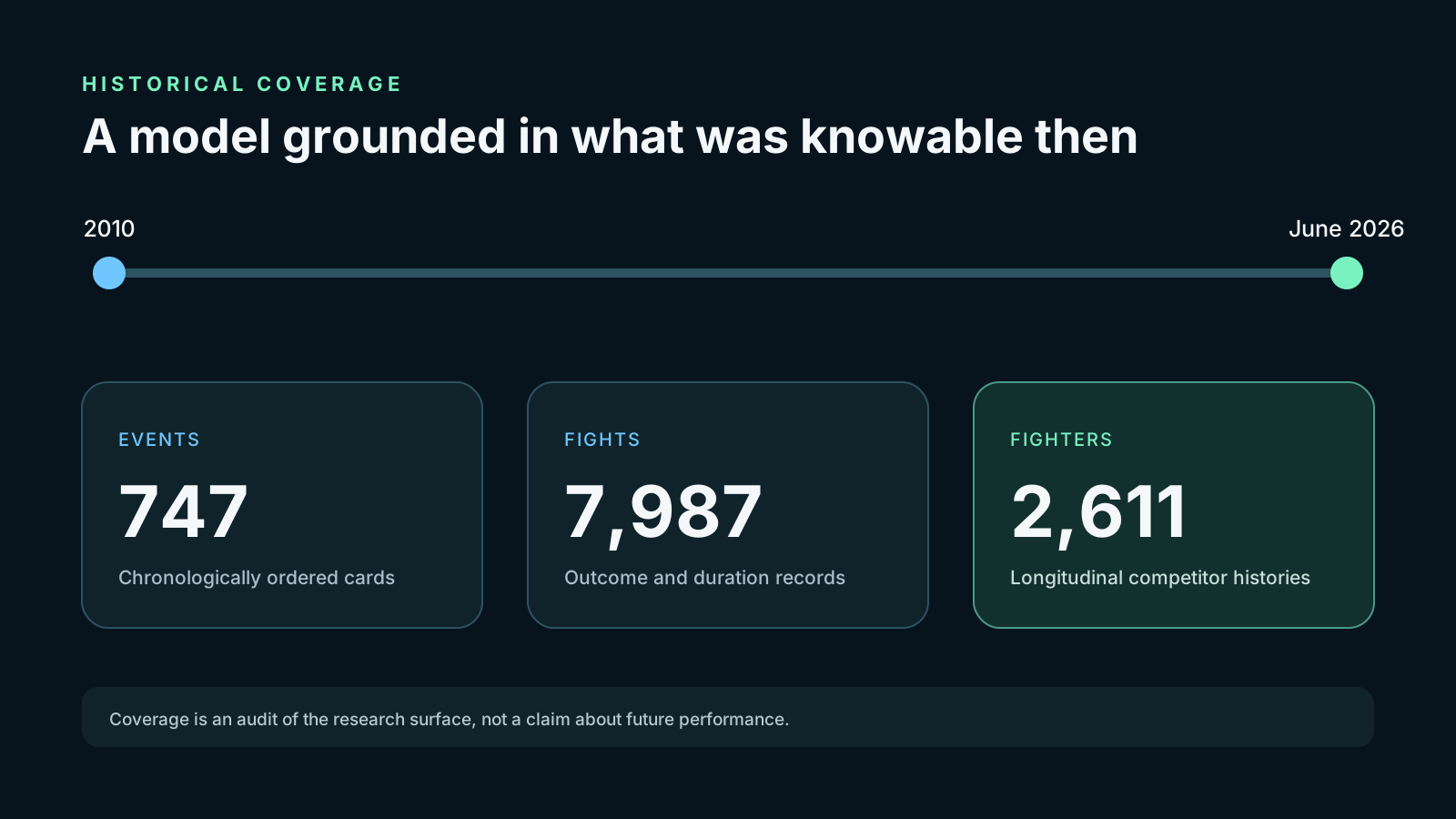
| Coverage item | Public aggregate | Role in evaluation |
|---|---|---|
| Time span | 2010–June 2026 | Supports forward-moving historical windows. |
| Events | 747 | The date boundary for ordering fight cards. |
| Fights | 7,987 | The prediction and outcome observation level. |
| Fighters | 2,611 | Longitudinal histories rebuilt through time. |
Chronological windows
Evaluate repeatedly, always facing forward.
The winner-model evaluation uses 711 chronological windows; the duration-model evaluation uses 727. Repeated windows make the test more demanding than one convenient cut and reveal whether behaviour is stable across different periods.
Fit on the past
Build competitor state and model parameters only from completed earlier events.
Freeze the boundary
Persist the feature view and prediction before opening the next evaluation window.
Score the future
Compare with newly observed outcomes, record failures and move the boundary forward.
Leakage audit
Make leakage checks a release gate.
A paired-orientation audit checked 49,368 rows, 66 features and 24,684 paired groups. It reported zero failures. This does not certify every possible data issue; it does show that the declared paired-leakage contract was checked systematically at the audited release.
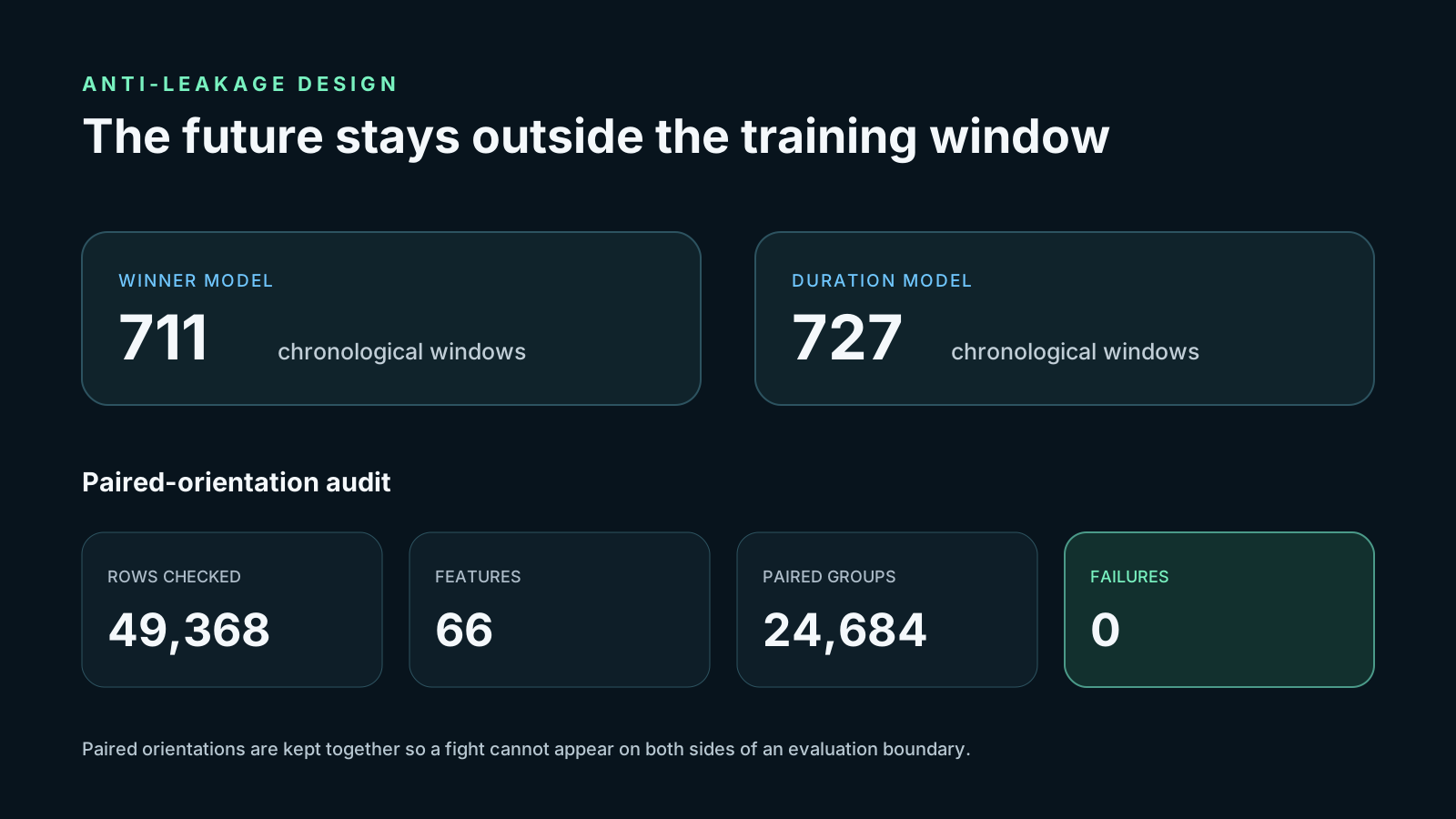
| Check | Public aggregate | What a pass means |
|---|---|---|
| Winner-model windows | 711 | Repeated forward-looking evaluation for the winner target. |
| Duration-model windows | 727 | Repeated forward-looking evaluation for the duration target. |
| Rows and features audited | 49,368 rows; 66 features | The declared feature surface entered the paired check. |
| Paired groups | 24,684 | Both orientations remain in the same evaluation group. |
| Audit failures | 0 | No breach of this specific paired-orientation contract was detected. |
Leadership takeaway
Leakage prevention is an operating capability
Teams do not avoid future knowledge through good intentions. They avoid it by defining feature timestamps, evaluation groups and release checks that can run again when data or code changes.
- Build a temporal data contract. “Historical” is not precise enough; every feature needs an as-of rule.
- Use symmetry without creating twins across the boundary. Paired orientations strengthen integrity only when grouping is preserved.
- Give each target its own evidence. A winner model and duration model answer different decisions and deserve separate promotion packs.
- Report the audit boundary. Zero failures is meaningful for the checks run, not a universal guarantee that leakage is impossible.
Limits
What this evidence cannot claim.
Coverage and audit counts do not reveal current accuracy, calibration, commercial value or suitability for use. The zero-failure result applies to the specified paired-orientation audit at the inspected release. Further feature-lineage, data-quality, drift and prospective shadow checks would still be required before any operating promotion.