Sports intelligence · Tennis · Model governance
When the market wins: governing a WTA model
A model can be technically sound and still not deserve release. This is the story of building a leak-safe tennis evaluation, learning what it could honestly support, and choosing evidence over launch theatre.
Updated with the June 2026 evaluation.
Decision
The right call: do not ship yet.
The research question was simple in public language: could match history produce a useful pre-match ranking without borrowing information from the market or the future? The evaluation answered a narrower question well. It did not justify pretending that two different evaluation populations were directly comparable.
Protect time
Every prediction was generated after training only on earlier information. Random splits would have made the model look at a world it could never have known.
Protect meaning
The market baseline and model card covered different populations. Presenting them as a clean head-to-head result would have overstated the evidence.
Protect the decision
The evidence supported further research and a shared-cohort test—not a public performance claim or an operating launch.
Chronological evaluation
Recreate the decision in time.
The June evaluation expanded each match into orientation examples, kept time order intact and produced out-of-fold predictions. “Out of fold” matters because no row helps fit its own prediction; “chronological” matters because later matches cannot teach an earlier decision.
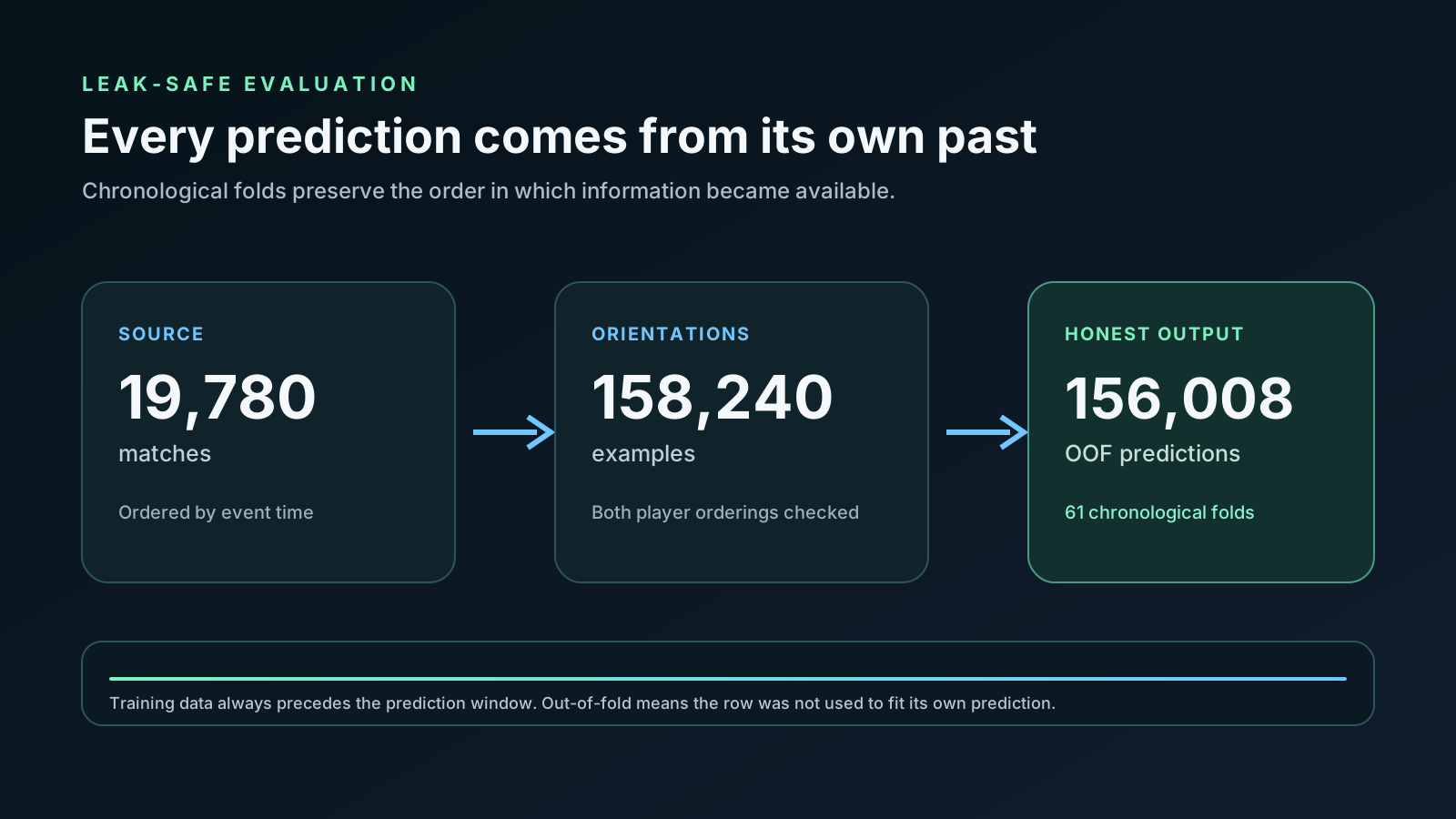
| Stage | Public count | Why it matters |
|---|---|---|
| Source matches | 19,780 | The event-time unit used to order the evaluation. |
| Orientation examples | 158,240 | Both player orderings support symmetry checks and paired handling. |
| Out-of-fold predictions | 156,008 | Predictions generated without fitting on their own rows. |
| Chronological folds | 61 | Repeated forward-looking windows rather than a random split. |
Information boundary
Show what the model could—and could not—know.
The model card covered 275 engineered features and explicitly recorded zero odds-derived inputs. Reversing player orientation produced a complement error of roughly 1.2 × 10⁻⁷, a useful integrity check that the representation behaved consistently.
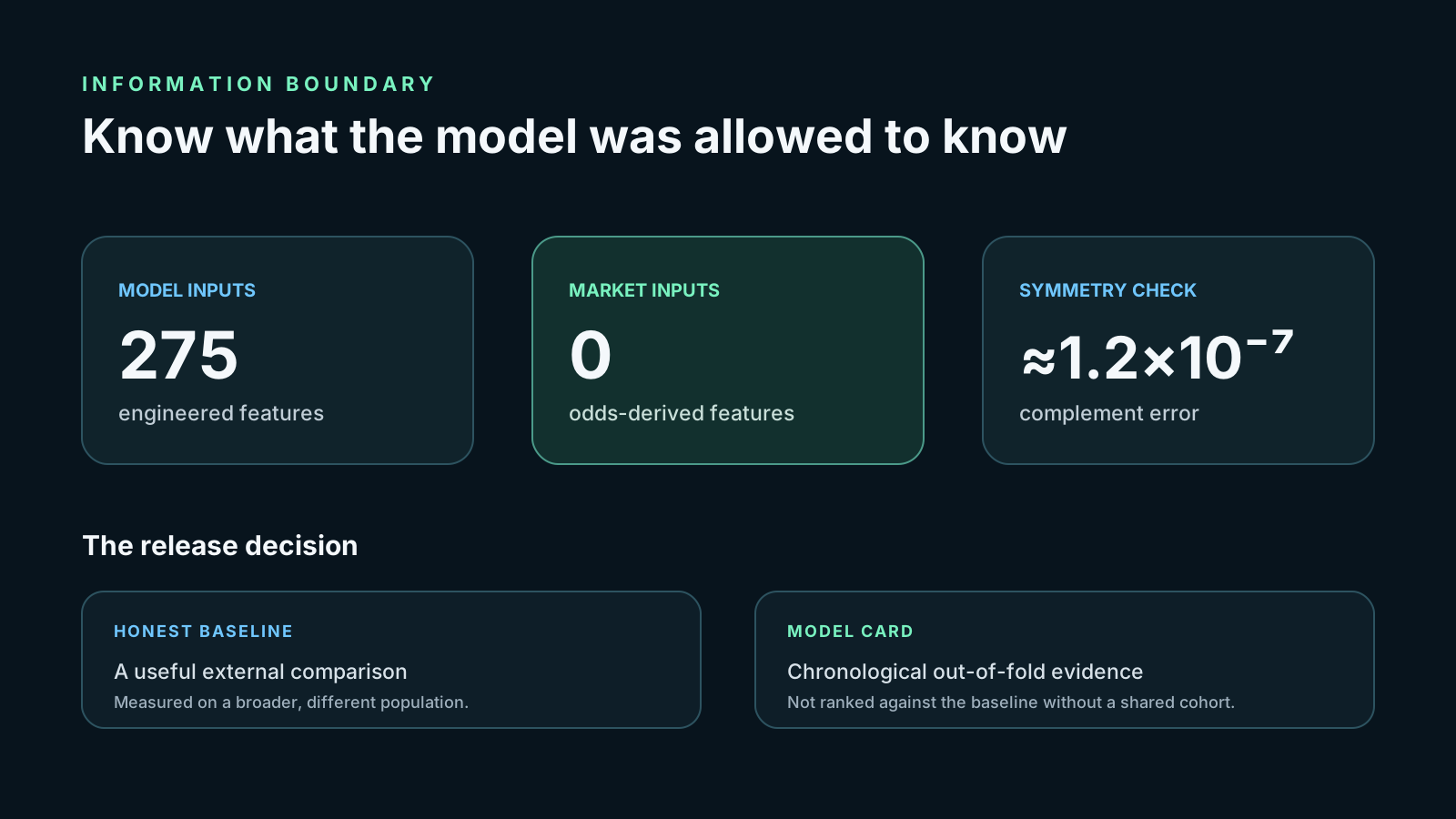
| Card | Evidence | Interpretation |
|---|---|---|
| Model inputs | 275 engineered features; 0 odds inputs | The research signal is separated from the market comparison. |
| Symmetry | Complement error ≈ 1.2 × 10⁻⁷ | Paired orientations behave consistently to numerical precision. |
| Honest baseline | Broader comparison population | Useful context, but not a like-for-like scorecard. |
| Model card | Chronological out-of-fold population | Needs a shared-cohort rerun before a direct ranking. |
Leadership takeaway
Stopping is a delivery milestone.
Data leadership is not measured by how many models cross a production line. It is measured by whether the organisation can distinguish promising research from dependable evidence before exposure grows.
- Write the comparison contract first. Decide the shared cohort, timestamp and metric before seeing results.
- Make leakage controls part of the product. Time ordering, paired orientations and input provenance should be repeatable checks, not notebook footnotes.
- Keep “interesting” separate from “actionable”. The model earned another evaluation cycle; it did not earn an operational release.
- Reward truthful stopping. A team that can surface an evidence gap early saves time, reputation and downstream risk.
Limits
What this evidence cannot claim.
The aggregates describe evaluation design and integrity checks. They do not establish current predictive quality, profitability, suitability for wagering, or superiority over a market. The honest next test is a prospectively defined shared cohort, followed—only if warranted—by shadow operation and explicit promotion criteria.