1. Problem
Economic papers are useful until engineering has to implement them. The gap between a convincing tokenomics narrative and a buildable system is usually filled with ambiguity, circular dependencies, and unclear ownership.
2. Approach
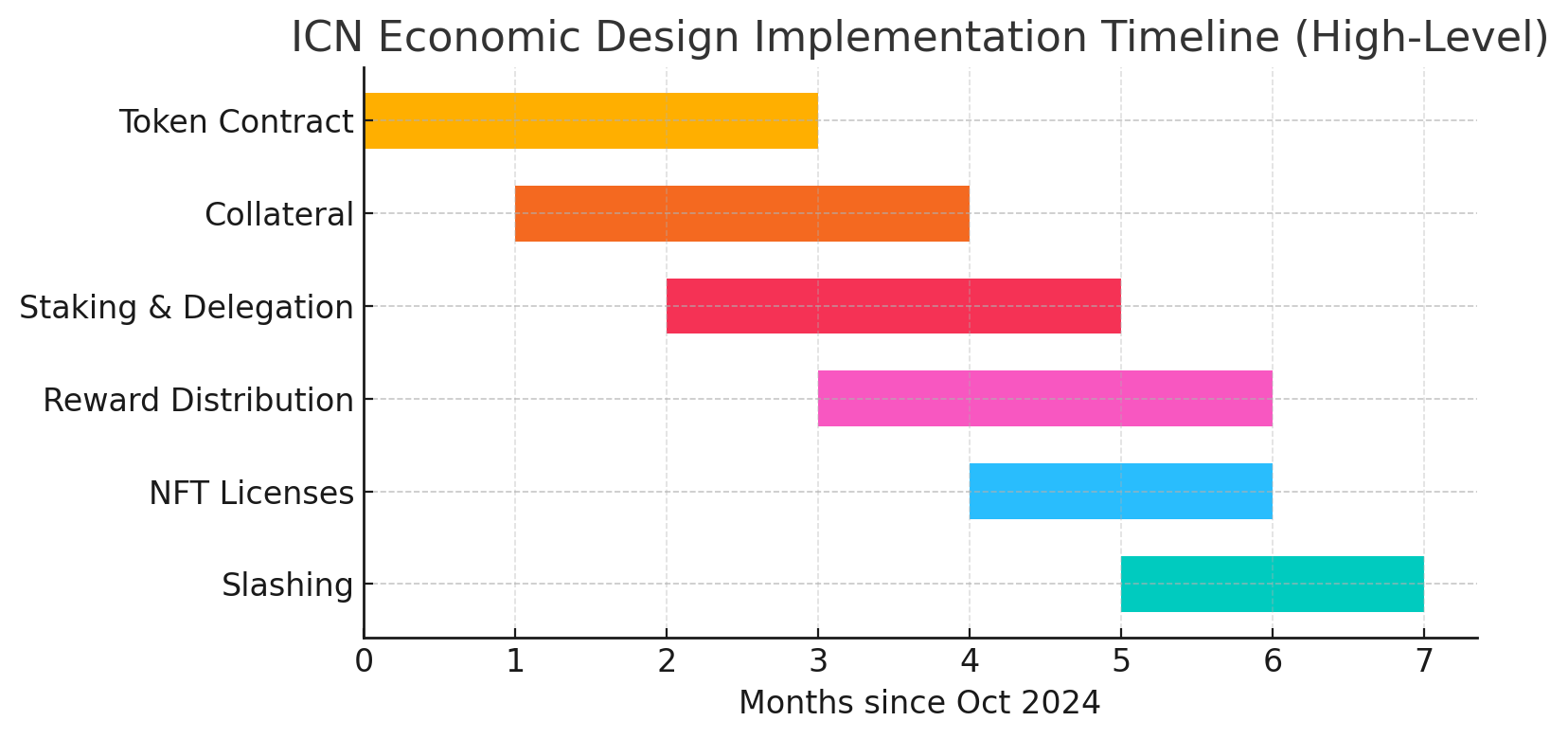
The implementation guide decomposed the economic design into modules, interfaces, and sequencing. Instead of rewriting the white paper, it translated the intent into work packages engineers and auditors could reason about.
- Map each concept to a concrete module or contract boundary.
- Define the order of implementation to avoid dependency loops.
- Make ownership and review paths visible across economics and engineering.
3. Evidence
4. Outcome
The guide became a bridge document: concrete enough for engineering, faithful enough for the economic design, and structured enough for audit and governance review.
5. Tech stack
- Interface-first specification work
- Module sequencing, dependency mapping, and review checkpoints
- Implementation notes tied back to economic requirements
6. Useful links
7. Related reading
8. Call to action
If you need to turn a strategy document or white paper into something engineering can ship against, I can help write the translation layer.