1. Problem
Translation changes words. Localization changes meaning. Sports models trained on generic internet text will happily invent club references, wrong nicknames, or the wrong tournament tone unless the context is constrained explicitly.
2. Approach
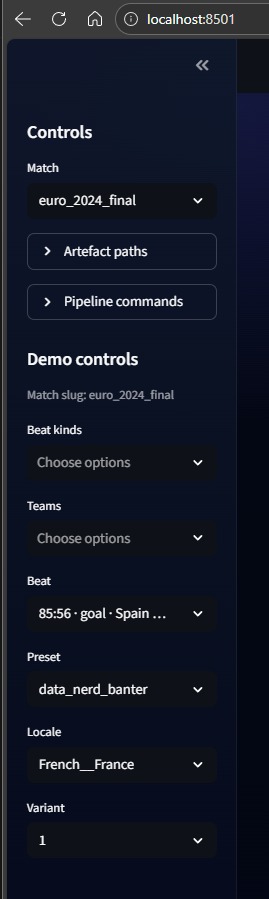
I packaged locale knowledge into small, auditable context cartridges that define what the model is allowed to say and what it must avoid.
- Whitelist relevant terms, nicknames, and tonal conventions per locale.
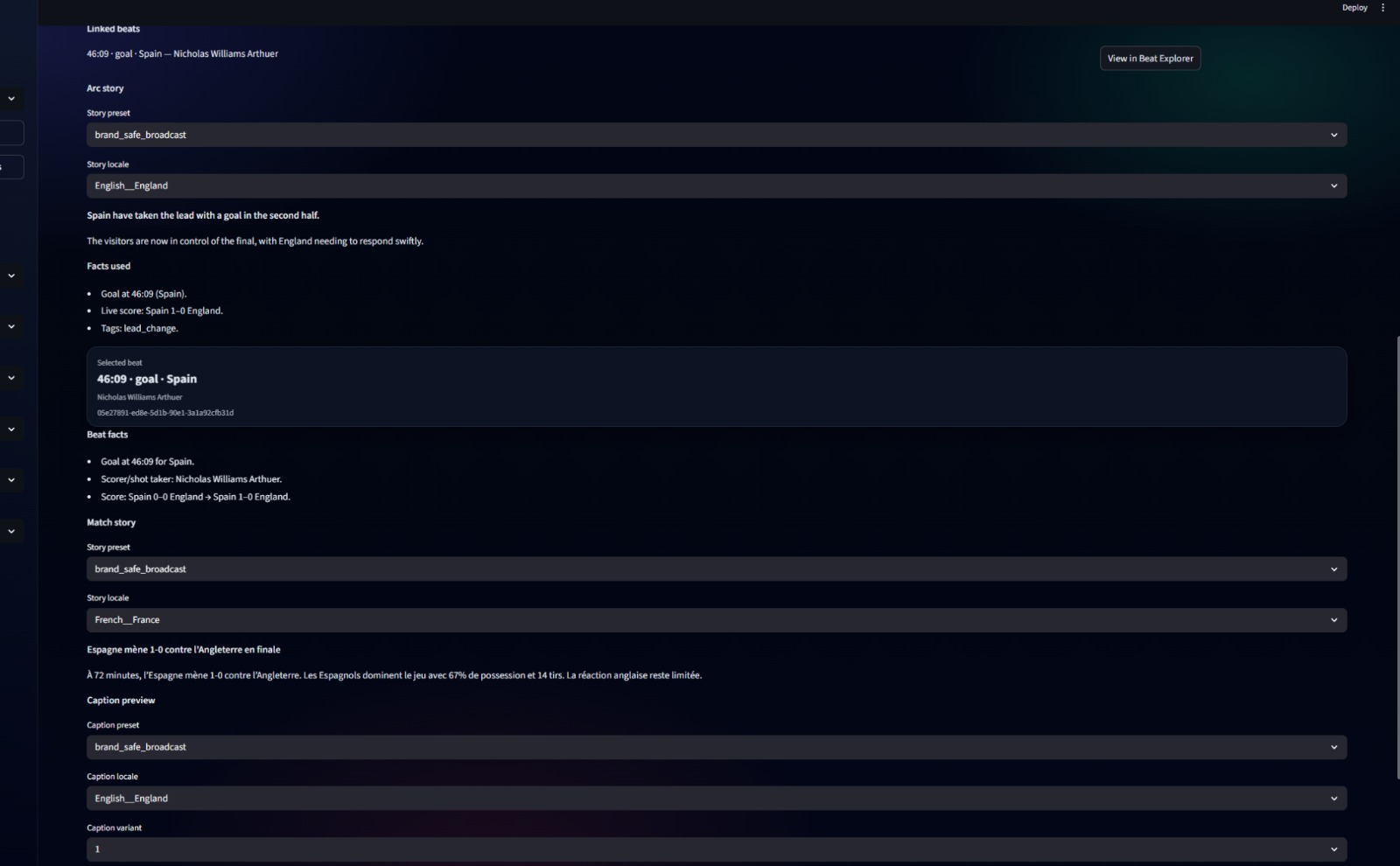
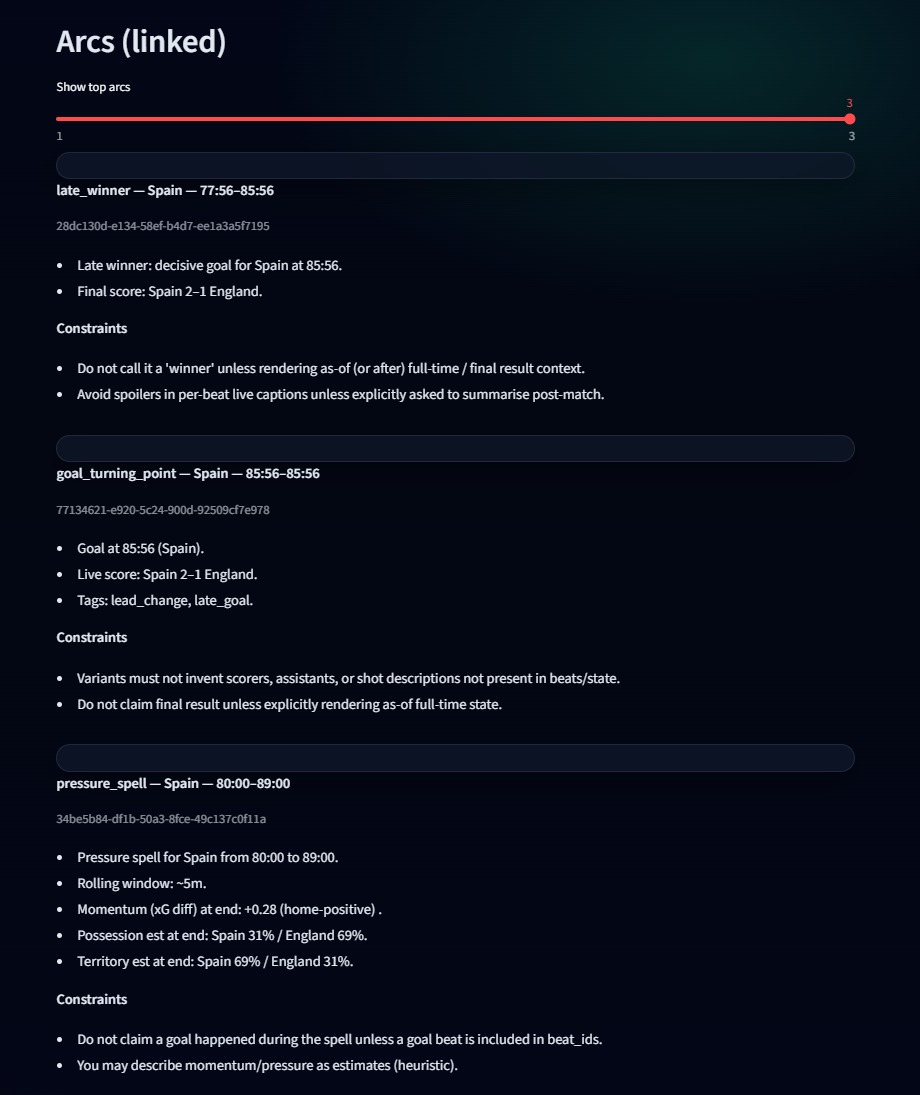
- Anchor output to the same beats and state facts across languages.
- Expose QA signals so localization failures are easy to spot.
3. Evidence
4. Outcome
The system made localization safer, faster to review, and much easier to explain to non-ML stakeholders because the constraints were explicit rather than buried in prompt text.
5. Tech stack
- Locale-specific context cartridges with explicit constraints
- Fact anchoring around beats and state
- Inspection UI for output and QA review
6. Useful links
7. Related reading
8. Call to action
If you need LLM output to stay native-sounding without drifting away from the facts, I can help design the constraint layer and QA workflow.