1. Problem
Teams often talk about throughput and latency as if they are properties of the hardware alone. In practice, the queueing discipline and routing pattern can change the system behavior just as much as the servers themselves.
2. Approach
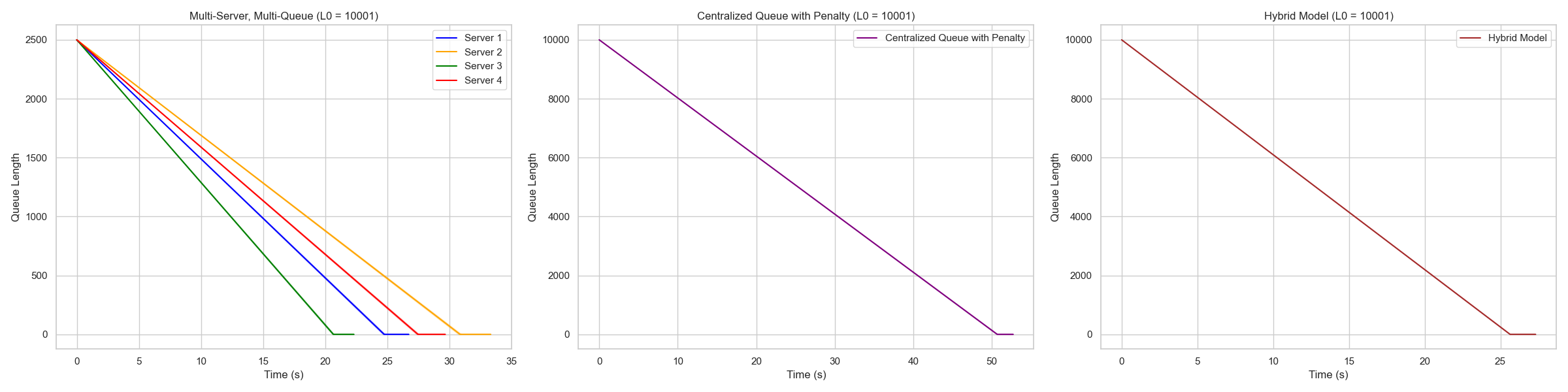
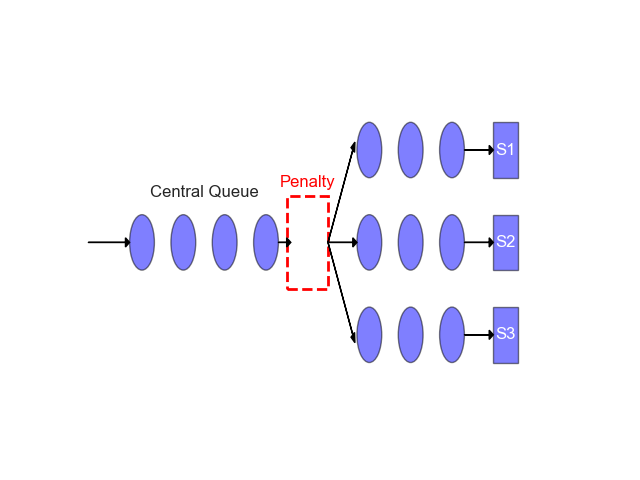
This project used queueing models to compare single-queue, multi-server, and multi-queue setups so the tradeoffs could be discussed quantitatively rather than rhetorically.
- Start with simple queueing baselines.
- Add architecture variants only when the baseline behavior is understood.
- Compare time-to-clear, load distribution, and wait-time behavior across patterns.
3. Evidence
4. Outcome
The work provided a simple framework for thinking about server-system efficiency and load-balancing tradeoffs, which is exactly the kind of clarity modeling should create.
5. Tech stack
- Python-based simulation and analytical calculations
- Queueing-theory formulas and architecture comparisons
- Visualization of system outputs and routing patterns
6. Useful links
7. Related reading
8. Call to action
If your architecture decisions still rely on intuition about load and wait times, I can help build the model that makes the tradeoffs explicit.